Open Shelving vs. Closed Cabinets in a City Barn-Style Kitchen
In a small city kitchen with barn-style leanings, the choice between open shelving and closed cabinets is rarely about taste alone. It is about how much dust you are willing to wipe, how many plates you need to hide, and whether the room feels generous or cramped when you walk in. The romantic version—thick oak shelves, enamel jugs, a row of pottery—looks wonderful in photographs. The working version has to survive weekday breakfasts, a spitting frying pan, and a delivery bag landing on the counter. The useful answer is usually a mix, but the right mix depends on the room and the way you cook.
The honest trade-off: air versus armour
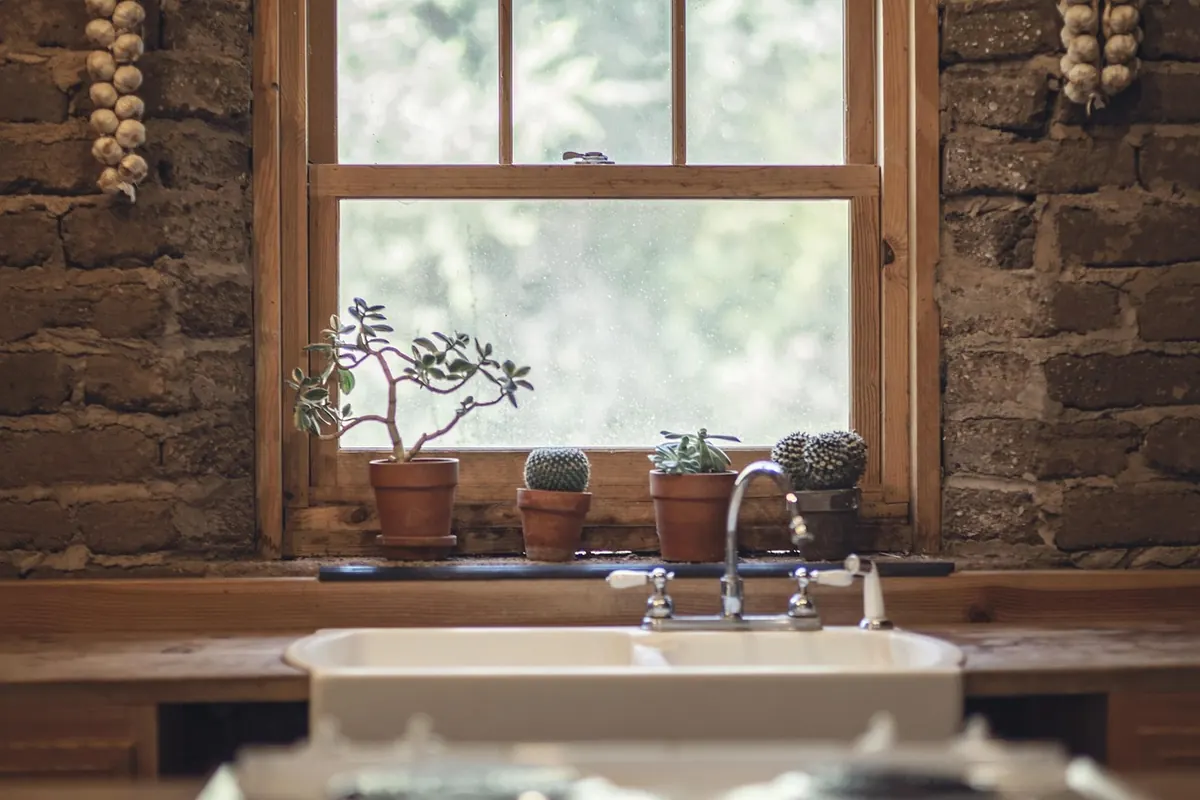
Open shelving gives a small kitchen breathing room. Without cabinet doors, the wall reads as surface rather than furniture, and light moves across it. In a narrow galley or a flat with one usable wall, that can make the difference between a room that feels tight and one that feels merely compact. Barn-style kitchens suit this approach: simple brackets, warm timber, a few good bowls, a stack of plates. The look is honest and uncomplicated.
Closed cabinets offer a different kind of honesty: the honesty of a door. They hide the mismatched mug, the emergency tin of tomatoes, the blender you use twice a month. In a city kitchen, where storage is often the true luxury, that matters. Doors also protect dishes from grease and dust, and they let you stop styling the room every time you finish chopping an onion.
Dust, grease, and the shelf above the hob
Open shelves collect more than dust. In a working kitchen they collect a fine film of cooking grease, especially near the hob. A shelf placed directly above or beside a high-heat frying zone will need regular degreasing; put it there only if you enjoy that job or if the shelf holds nothing you mind wiping. The same applies to open racks beside the sink, where splashes and soap residue land.
Where grime gathers
The worst spots are predictable: the lowest shelf, the shelf nearest the cooker, and any open storage within arm's reach of the prep area. The top shelf is usually dustier but less greasy. Use that difference. Keep daily plates and mugs on a middle shelf you can wipe quickly, and reserve the highest shelf for lightweight, occasional pieces rather than the good china you use every Sunday.
A cleaning rhythm that fits real life
Empty one shelf at a time, wipe it with a damp cloth and a mild degreaser, and dry it before reloading. Once a week is enough for most city kitchens; near a range, check more often. Closed cabinets are not immune—doors and handles collect grease too—but they protect the contents. If you choose open shelves, choose a finish you can clean without anxiety. Painted timber, sealed oak, and powder-coated steel are practical. Raw, heavily waxed wood near a hob is asking for trouble.
Storage math for a compact kitchen
Open shelving is often sold as a way to gain storage. It can be, but only if the things on it are things you actually use and can lift down safely. A shelf packed with decorative bowls is not storage; it is display. In a small kitchen, display has to earn its keep.
- Count the daily items first. Plates, bowls, mugs, glasses, the pan you use most. These deserve the easiest reach.
- Put ugly, bulky, or breakable things behind doors. Flour, rice, mismatched containers, the food processor, spare serving dishes.
- Use open shelves for repetition. A row of identical glasses or stacked bowls looks calm; a jumble of different shapes looks like clutter.
- Leave some empty space. A shelf with a little air reads as generous. A shelf packed to the bracket reads as pressure.
- Plan for depth. Deep shelves become dark tunnels. Shallow shelves—roughly the depth of a dinner plate—are easier to see and clean.
If you remove upper cabinets, replace the lost volume somewhere. A tall pull-out pantry, a slim drawer bank, or a bench with lidded storage can do more for a small kitchen than a beautiful open shelf that holds only teacups.
Visual openness and the barn-style look
Barn style in a city kitchen works best when it is edited. The reference points are familiar: beadboard, simple shaker doors, black iron hardware, warm timber, enamel, stoneware. Too many of them at once and the room becomes a stage set. Open shelving can lighten that mix, but only if the closed cabinets are calm. Choose one strong material for the shelves and let the cabinets recede. Paint the upper walls and shelves the same colour if you want the room to feel taller.
Closed cabinets can look heavy in a small room, especially if they run to the ceiling in a dark colour. That weight is not automatically bad. Lower cabinets in a deep green or charcoal, with open shelves above in pale oak, give the room a grounded base and a light top. The mistake is to make every surface a feature. In a compact kitchen, the eye needs somewhere to rest.
Resale impact: what buyers see and what they open
Buyers walk into a small kitchen and look for storage before they admire the styling. Open shelves can make a room photograph well and feel larger, and they can signal character in a flat that might otherwise feel generic. But a buyer with a full set of pans and a fear of dust may see the same shelves as missing cabinets. In cities where kitchen space is tight, that reaction is worth taking seriously.
If you plan to sell, keep the open shelving modest and keep the closed storage generous. Make sure every shelf has a clear purpose and that the wall looks tidy with normal, everyday items on it. Photographs should show a working kitchen, not a prop cupboard. If you are removing cabinets to install shelves, think about where the displaced items will go. A kitchen that looks airy but stores less can be a harder sell. For advice specific to your building and local market, ask a local estate agent or surveyor rather than relying on a general rule.
A hybrid layout that works in a small city kitchen
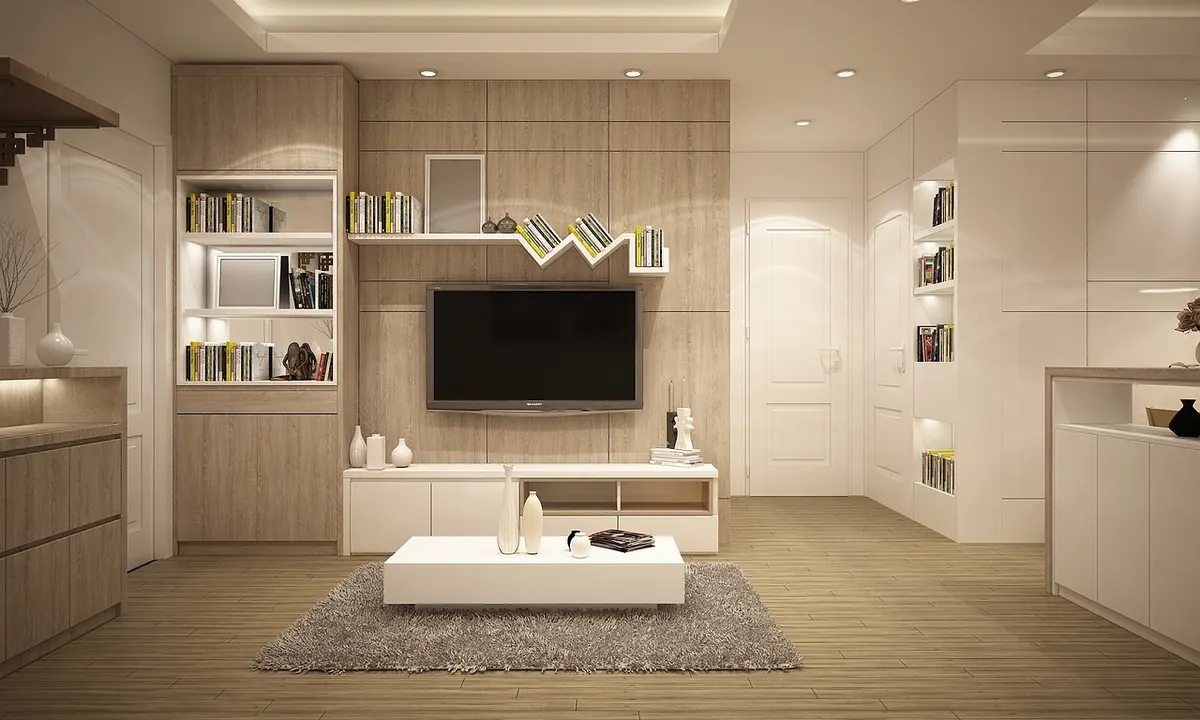
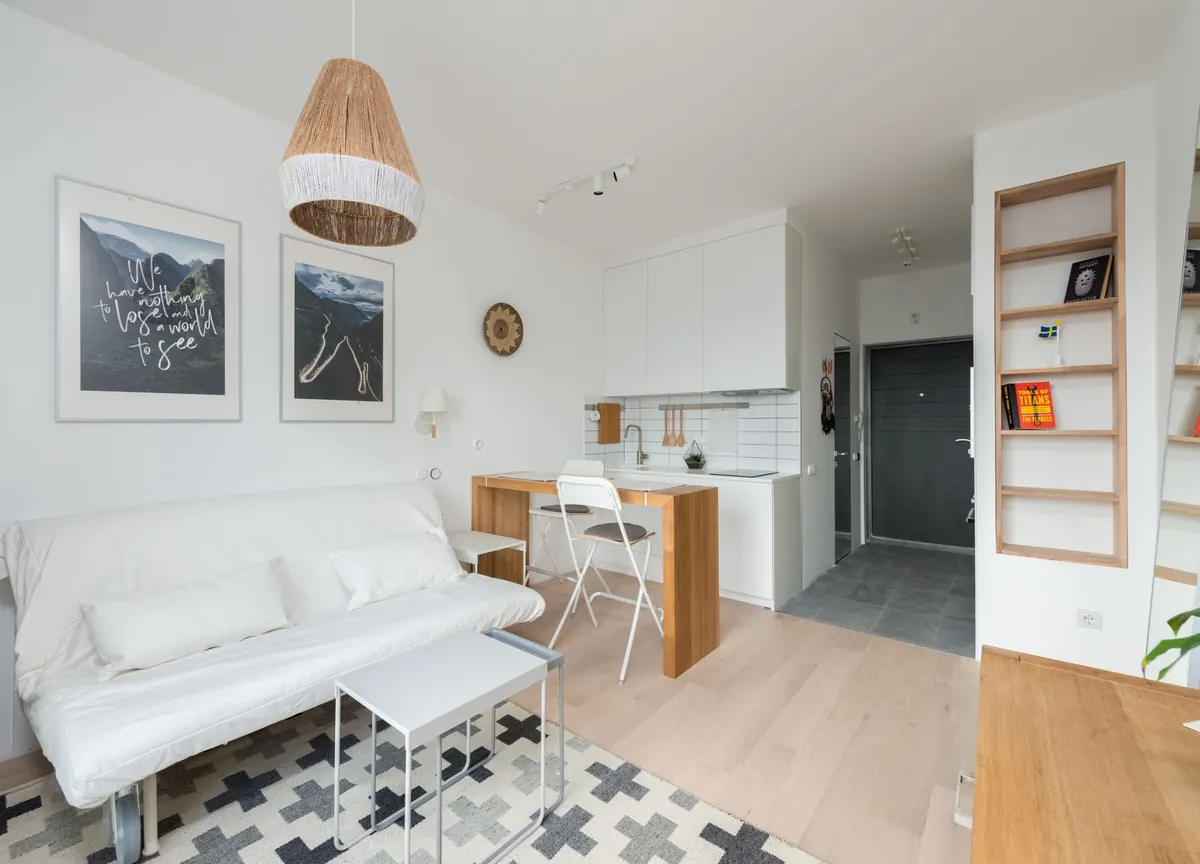
The most practical barn-style kitchens use both. The aim is not a fifty-fifty split but a sensible division between what should be seen and what should be hidden.
- Map the wall by task. Mark the sink, the hob, and the main prep area. Keep closed cabinets around the messy zones and use open shelves where the wall is quieter.
- Put closed storage low and open storage high. Lower cabinets and drawers hide heavy pots and awkward appliances. Open shelves above eye level can hold plates, bowls, and glass jars without crowding the worktop.
- Give the open shelf a job. One run for everyday dishes, one short shelf for coffee things, or a single shelf at the end of the run for cookbooks. Avoid filling every available wall.
- Protect the shelf near the hob. If you want open shelving there, keep it shallow and use it for items you wipe often. Better still, leave that wall solid and put the shelves farther along.
- Test before you commit. Live with a temporary shelf or a cleared cabinet for a month. Notice what you reach for, what gathers dust, and what you miss hiding.
- Light the open shelves. A small strip light or a wall light makes them useful after dark and stops them becoming dark holes.
Choose for the Tuesday, not the photo
A barn-style kitchen should feel warm and useful on an ordinary Tuesday, not only on the day it is photographed. If you love the look of open shelves and you will keep them tidy, use them where they make the room feel lighter. If you cook hard, store a lot, and want to close the door on the mess, let cabinets do the quiet work. The best small kitchen is not the one with the most rustic props. It is the one where the plates are within reach, the dust has a manageable home, and the room still feels like somewhere you want to sit.
Photo: newhouse / Pixabay