The Urban Rustic Apartment Move-In Checklist: 12 Pieces That Earn Their Space
Rustic style and small city apartments are usually introduced as opposites: one suggests barn doors and long harvest tables, the other a fifth-floor walk-up with a two-metre kitchen. In practice they get along better than people expect. What a compact flat actually needs is texture, warmth, and storage that hides in plain sight, and that is most of what rustic furniture does well. The catch is discipline. A poorly chosen piece eats a corner and gives nothing back. The twelve items below share one trait: each does at least two jobs and earns its square metre. Work through them in order and your move-in list writes itself.
The Test Every Piece Has to Pass
Before you buy anything, hold it up against four questions. If a piece fails two of them, it is decoration, not furniture, and it can wait.
- Does it hold something? A bench with a lift-up seat, a trunk, a basket that fits an existing shelf.
- Can it move rooms? A drop-leaf table that is a desk on Tuesday and a dinner table on Saturday.
- Does it fold, roll, or stack? Anything on locking casters or hinges is worth more than its footprint.
- Does the finish survive city life? Oiled oak, waxed pine, and powder-coated iron forgive scratches. High-gloss veneer does not.
Then measure, properly. Door swings, radiator clearance, the turn in the stairwell, the height of the lift door. Note the measurements in your phone before you go shopping. Most returns on furniture come down to two centimetres.
Living Room: Seating, Surfaces, and Somewhere to Hide Things
1. A reclaimed-wood storage bench. Put it under the window, in the entry, or at the foot of the bed. A lift-up seat swallows winter boots, spare bedding, and the tool kit you use twice a year. Aim for 40cm depth so it does not block the walkway, and check the lid stays open on its own — a hinge that slams is a hinge you stop using.
2. A drop-leaf table. Folded flat, this is a 60cm-deep console against the wall. Open one leaf and it seats two; open both and four people can eat. Ask to work the mechanism in the shop. Stiff hinges loosen with wax; wobbly ones never get better.
3. A vintage trunk used as a coffee table. Look for a height close to your sofa seat, roughly 40 to 45cm, so cups land within reach. Old trunks often smell of attic, so leave the lid open for a week and wipe the interior with a vinegar solution before you store blankets inside.
4. A narrow ladder shelf. At 30 to 35cm deep it holds books, a lamp, and a plant without stealing floor. Anchor it to the wall — a ladder shelf is a lever, and a loaded lever tips. Keep the top rung for light things only.
The Kitchen Corner That Works Twice
5. A butcher-block cart on locking casters. In a galley kitchen this is the single most useful thing you can buy. It gives you a prep surface, a serving trolley, and a place to stack the pots that do not fit in the cupboard. Check the worktop height against your own — around 90cm suits most people — and make sure the casters lock, or the cart will drift every time you lean on it.
6. A Shaker-style peg rail. A strip of pine with six or eight pegs holds coats, aprons, pan lids, tea towels, and a hanging basket of garlic. Mount it into studs rather than plasterboard alone, at about 170cm for adult coats and lower for children. In a hallway too narrow for a console, a peg rail and a shallow shelf above it do the same work in ten centimetres of depth.
Walls Do the Heavy Lifting
When the floor is full, look up. Three wall-based pieces carry most of the storage in a small rustic flat.
7. Woven baskets sized to your shelves. Measure the gap between shelves first, then buy seagrass or jute baskets that slide in with a centimetre to spare. A matching set of three reads as intentional; a mismatched pile reads as clutter. Tie a luggage tag to each handle so you know what is inside without unpacking it.
8. A wall-mounted fold-down desk. Seventy to ninety centimetres wide is enough for a laptop and a notebook. Folded away, it is a picture ledge. Put it near a window if you can, and choose a stool or chair that tucks underneath when the desk is down.
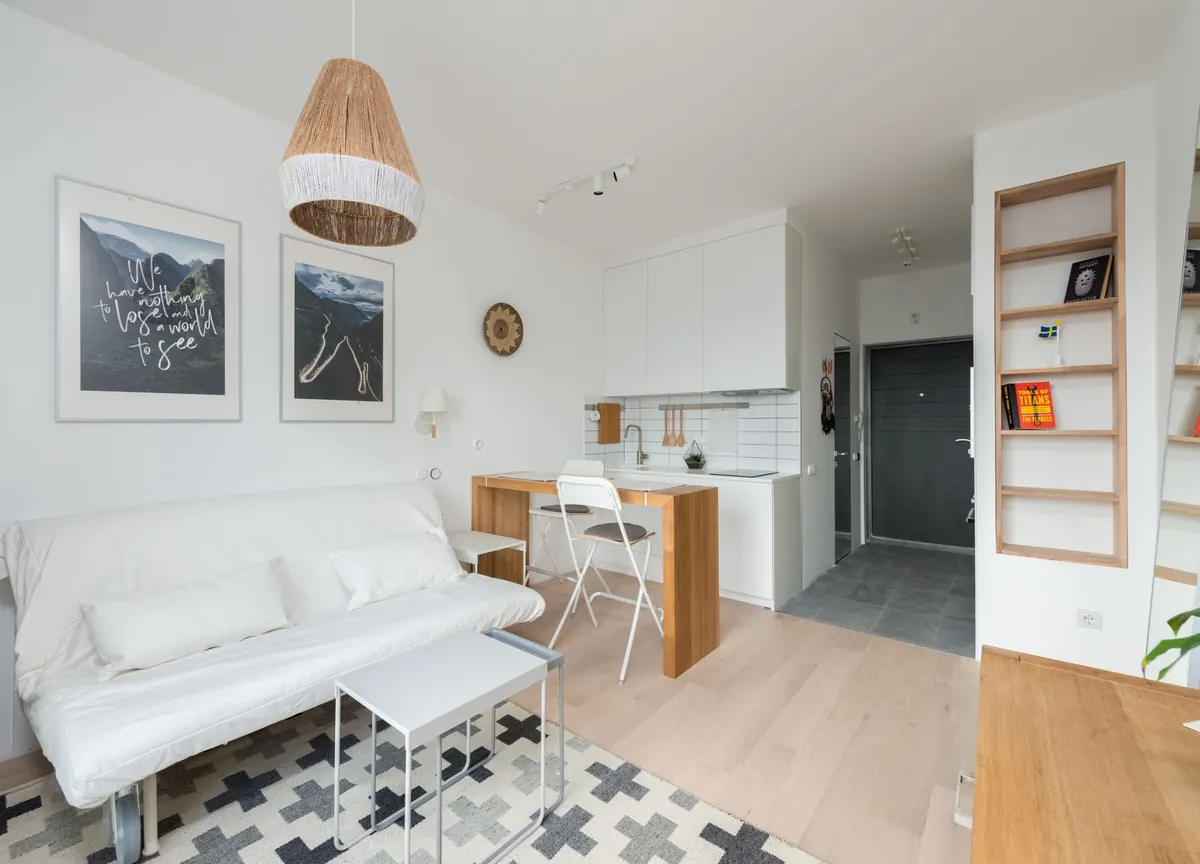
9. An iron or timber daybed. In a studio, this is your sofa by day and your guest bed by night. Buy one that takes a standard mattress size, so spare bedding is easy to find and easy to store. Place it perpendicular to the wall to divide sleeping from living without building a partition.
The Small Pieces That Set the Tone
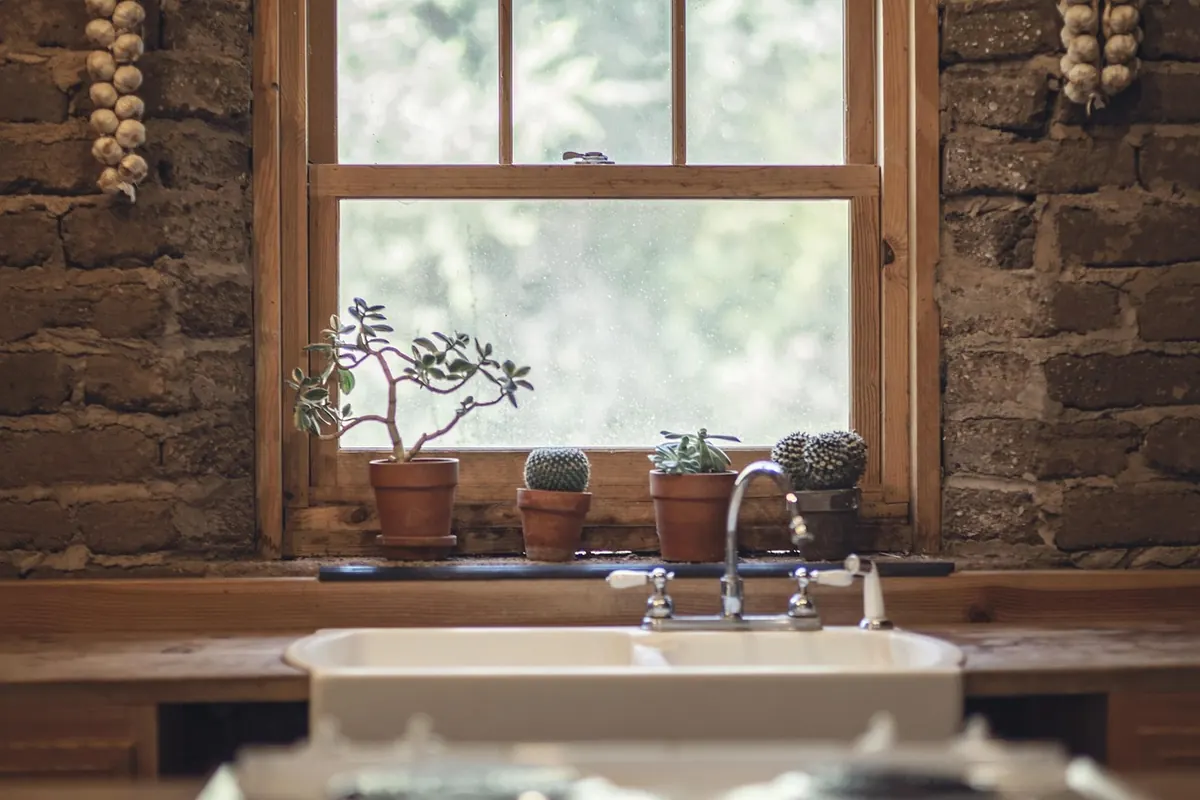
10. A stoneware crock or terracotta pot. By the door it holds umbrellas and a walking stick; in the kitchen, utensils; on the sill, a plant. Check the base sits flat and the glaze is food-safe before you put anything in it you will later eat with.
11. A canvas or linen curtain instead of a closet door. Swapping a swinging door for a curtain on a ceiling-mounted rod buys back a metre of swing space and hides a rail of clothes or open shelving behind soft texture. Wash it before hanging so it does not shrink above the hem.
12. A flat-weave wool or jute rug. In an open-plan studio, a rug is how you mark a living zone without a wall. Choose a size where the front legs of the sofa sit on the rug, not beside it, and favour flat weaves — they lie still under chairs and vacuum without shedding.
Move-In Week: The Order That Saves a Second Trip
Sequence matters more than shopping. Do it in this order and you will only drill holes once.
- Clean and paint before anything is carried in. Empty rooms are the only rooms you will ever have.
- Place the three anchors — bench, drop-leaf table, daybed — and live with them for two days before committing.
- Mark wall positions in pencil, check for pipes and studs, then mount the peg rail, shelves, and desk.
- Add textiles last: curtain, rug, cushions. They change the acoustics as much as the look.
- Keep every box and receipt for three weeks. The piece that seemed essential in the shop often reveals itself as the one blocking the radiator.
A rustic city flat is not a barn. It is a small, well-edited collection of warm surfaces that happen to work hard. Buy slowly, measure twice, and let each piece prove it deserves the corner it takes.
Photo: Max Vakhtbovych / Pexels